The Connectional Church #2

Your United Methodist church is a connectional church. This means that the local church is a part of something much larger that magnifies our ministries on a national and global scale. Through this structure, United Methodists work together to advance comon goals, respond to needs, and make a broader impact for Christ in the world.
Today we will explore one aspect of the organization of the United Methodist Church, called the district.
What is a district?
A district is a geographic area within an annual conference, overseen by a District Superintendent. Each district includes a group of local churches, ministries, and clergy. The district structure helps coordinate ministry, provide support, and connect local churches with the broader conference and denomination.
Key points:
- Led by a District Sperintendent (a clergy member appointed by the bishop)
- Supports and supervises local churches and pastors
- Facilitates communication and resource sharing between churches and the conference
- Organizes district-level events, training, and mission initiatives
How many districts are there in our conference?
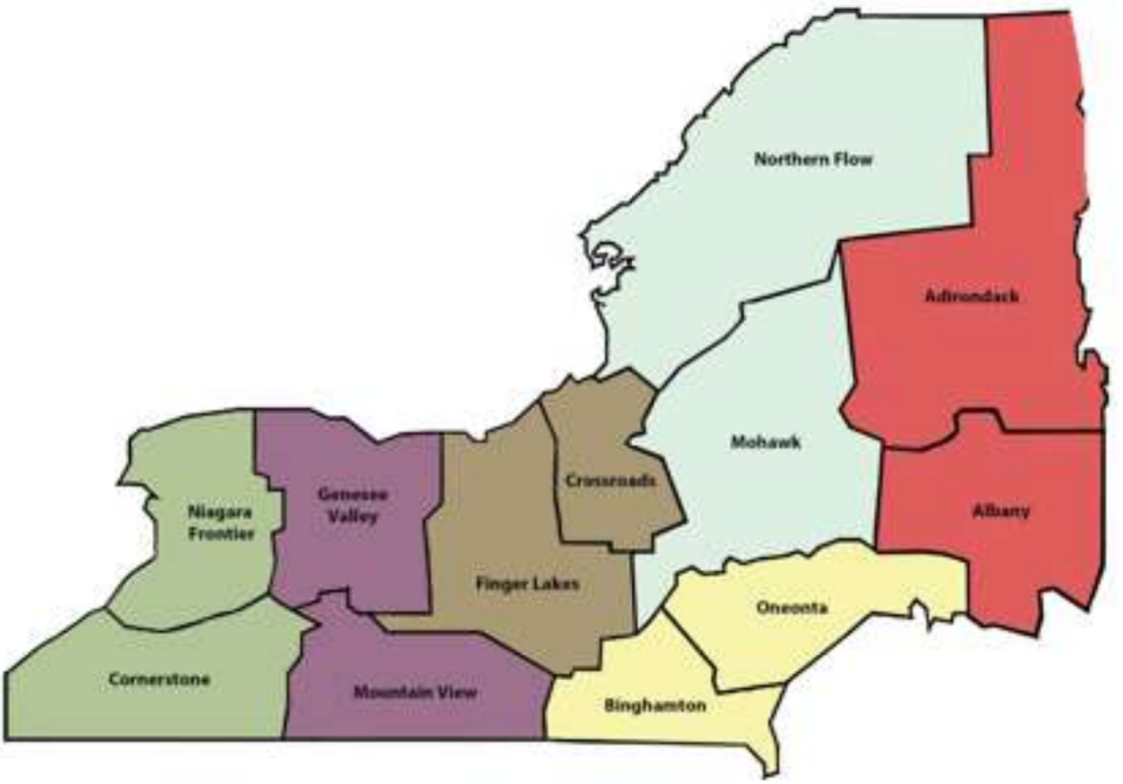
There are currently 12 districts in the Upper New York Annual Conference. These are denoted on the map above. Williamsville UMC is in the Niagara Frontier District.
How many churches are in the Niagara Frontier district?
There are currently 57 churches and 3 new faith communities within the Niagara Frontier District.
How is the district managed?
These districts are overseen by 6 presiding elders which are called District Superintendents (DS.) Each superintendent manages two districts, denoted by the same colors in the map above. The title "superintendent" was first applied to Thomas Coke and Francis Asbury in 1784 in connection with Methodist work in America.
Our current district superintendent is the Rev. Mary A. Kelly. She was appointed September 1, 2024. Rev. Kelly is assisted by an administrative assistance whose name is Lyn Moon.
The typical term for a DS is six years, although it can be extended to eight years. The functions of the DS include:
- Oversight of churches and pastors - Supervises the work of all pastors and local churches in the district, provides spiritual and administrative leadership, and acts as a "pastor to pastors," offering support, guidance, and encouragement.
- Presiding at Charge Conferences - leads annual meetings (charge conferences) for each church, where important decisions are made about church leadership, finances, and ministry.
- Appointment process - Works with the bishop to help appoint pastors to churches and other ministriess. Must know the clergy and churches well to make thoughtful, prayerful matches.
- Ensuring adherence to Church discipline. Ensures the churches and pastors follow the rules and policies of the United Methodist Church (the Book of Discipline.)
- Mission and Ministry Development - Helps churches develop strategies for outreach, evangelism, and discipleship. Equips congregations for service in the church and the wider community.
- Connectional leadership - Servies as a visible link between local churches and the wider United Methodist connection (regional, national, and global church.) Represents the district in the Annual Conference and collaborates with other leaders.
- Conflict resolution and support - Provides counsel and meditation in times of conflict or transition within churches. Supports Clergy and laity through challenges and changes.
- Administrative duties - Oversees district staff and administrative functions. Manages district resources and supports church mergers, closures, and new church starts.
Do districts have support committees like our local church does?
Similar to our local church, the district also has committees that assist the DS in managing the district and consist of both clergy and laity members. Examples of the committees are:
- District Committee on Ordained Minstry (DCOM)
- Oversees the candidacy, credentialing, and support of individuals pursuing ordained ministry within the district.
- District Committee on Superintendency
- Provides support and accountability for the district superintendent, including anual evaluation and recommendations regarding their appointment.
- Distruct Board of Church Location and Building
- Reviews and approves proposals for buying, selling, or building church property within the district.
- District Committee on Lay Servant Ministries
- Trains, certifies, and supports lay servants, speakers, and ministers.